
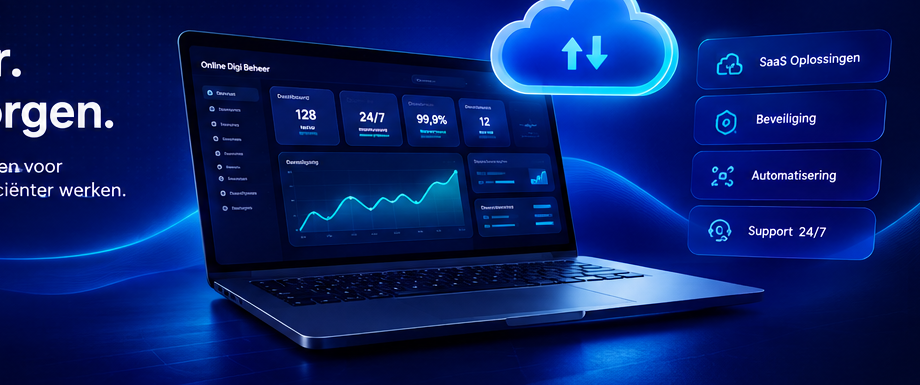
A digital workplace brings together applications, information and collaboration in a secure online working environment.
What is a digital workplace?
A digital workplace is a digital work environment in which employees gain access to the applications, information and workflows they need on a daily basis. Instead of separate systems and different login routes, a single logical input for work, communication and processes is created.
Why cloud software is central
Cloud software makes a digital workplace accessible from different devices and locations. Updates are arranged centrally and teams need to be less dependent on local installations. This supports hybrid working and makes management clearer.
Integrations prevent duplication of effort
A digital workplace delivers value especially when existing systems communicate well with each other. For example, API links can connect CRM, planning, documents, HR, and financial software. Employees then have to transfer data manually less often.
Security and access rights
A professional digital workplace uses clear roles and rights, secure authentication, logging and encrypted connections. Especially when employees work outside the office, access must be well protected without unnecessarily complicating the user experience.
A tailor-made workplace
Online Digi Beheer can design and develop a digital workplace that connects to the processes and systems of the organization. In doing so, we look at UX, integrations, security, management and the ability to add new features later.
How do you approach this in a practical way?
A good result starts with a clear inventory. First, identify which users are going to work with the solution, which actions they perform on a daily basis and what information they need. Then see which parts are really necessary for the first version and which functions can be added later. In this way, the scope remains manageable and it can be tested more quickly whether the solution works in practice.
It is then important not to treat design and technology separately. The user experience determines how easy people can work with the system, while the technical architecture determines how reliable and scalable the platform is. By designing these parts together from the beginning, you avoid costly adjustments when the product is already in use.
Finally, the period after going live is also part of the plan. User feedback, new links, changing processes and security updates ensure that software continues to develop. Therefore, reserve space for monitoring, maintenance and a roadmap with improvements. This makes the investment more sustainable and prevents a platform from coming to a standstill after completion.
Important points to note:
- Determine in advance which processes and user roles are central.
- Make clear agreements about data, security, backups and access rights.
- Think early about API links and systems with which data should be exchanged.
- Test key user flows before going live with real-world scenarios.
- Work with a phased roadmap so new features can be added in a manageable way.
- Plan structural maintenance and further development instead of just a one-off delivery.
When is customisation interesting?
Customization is especially interesting when standard software does not sufficiently match the way the organization works, when multiple systems have to work together or when the digital product itself is part of the revenue model. Even with complex roles, specific dashboards or unique customer processes, customisation can add a lot of value.
That doesn’t mean everything has to be built from scratch. Where possible, a strong solution combines proven components and existing services with customization where this is distinctive or necessary. This way, development remains efficient without the organization being limited by a standard package.
Frequently asked questions about Digital workplace: working smarter and more flexibly
How long does an average journey take?
That depends on the size, integrations and desired functionality. An initial usable version can often be developed in phases, after which expansion takes place based on priority and feedback.
Can existing software be linked?
In many cases it is. Existing systems can exchange data with a new platform via APIs, webhooks or other links. The technical possibilities are investigated in advance.
What happens after going live?
After going live, the phase of monitoring, support and further development begins. New features, optimizations and security updates can then be scheduled in a controlled manner.
Conclusion
Digital workplace: working smarter and more flexibly requires more than just a technical choice. The best results are achieved when strategy, user experience, technology, security and further development are treated as a whole. By starting small enough to learn quickly and choosing a scalable foundation at the same time, software is created that is usable today and can continue to grow tomorrow.
Would you like to know more about the technical possibilities? Take a look at ourSaaS development servicesRead more aboutintegrations and API linksor contact us directly for a substantive introduction.
Discuss your SaaS idea
Do you want to know how this topic can be applied within your organization? Online Digi Beheer thinks along about strategy, UX, technology, integrations and further development.